Asia


Our approach connects boardroom strategy with ground-level operations, enabling companies to address and prevent human rights harms to workers.
Our Asia team advances corporate accountability and more effective human rights due diligence to improve the wellbeing of workers.

Our Asia priority sectors
We focus on these high-risk sectors where we’ve documented systematic labor rights violations throughout Asia.
Our Asia focus issues
Key labor issues in Asia affecting worker rights and supply chain accountability.

Forced labor among migrant workers
Migrant workers face heightened risks due to debt, coercive recruitment, and weak legal protections.
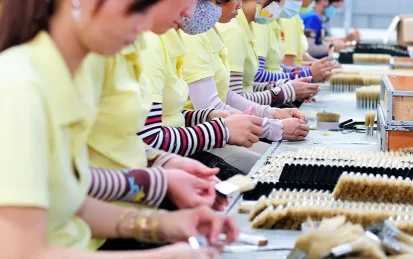
Gender-based violence and discrimination
Women face discrimination, harassment, and limited protection in many workplaces across Asia.
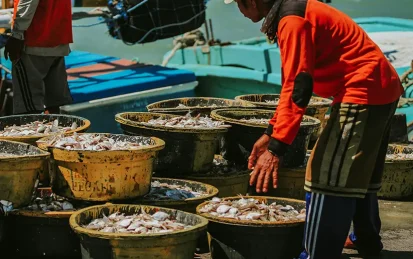
Occupational health and safety
Many sectors lack adequate safety standards and training, exposing workers to frequent injuries and health hazards.
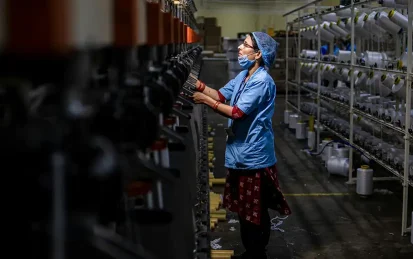
Excessive overtime
Excessive working hours and underpayment remain widespread in labor-intensive industries across Asia.
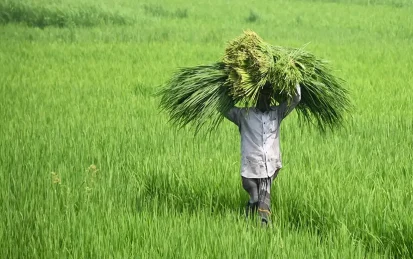
Living wage
A majority of workers across key sectors in Asia earn below a living wage, impacting health, well-being, and economic resilience.
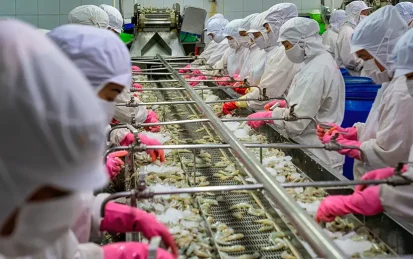
Weak supplier management capacities
Factory and supplier managers often lack the training and tools to implement fair hiring practices.
Country spotlight
Explore our work in the region.
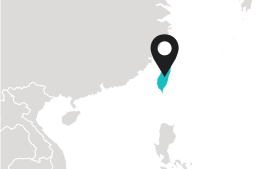
Migrant workers in Taiwan’s manufacturing sector play a critical role in sustaining its export-driven economy, but face challenges such as high recruitment fees, limited grievance mechanisms, and excessive overtime.
Our Taiwan-based work includes conducting labor risk assessments in manufacturing and fishing sectors, training management and recruiters on migrant worker protections, and partnering with major global brands on forced labor screening.
Priority sectors
- Electronics
- Apparel and footwear
- Machinery and metal products
- Bicycles
- Apparel and footwear
- Seafood
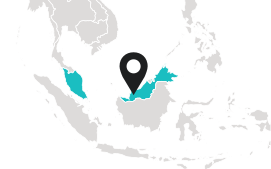
Malaysia heavily relies on migrant workers who face heightened risks of systemic forced labor, debt bondage, passport confiscation, and labor abuse, prompting significant international scrutiny and trade restrictions.
Our groundbreaking forced labor investigations in electronics catalyzed industry-wide “no fee recruitment” standards. We partner with major global brands on forced labor screening and provide our Recruitment Cost Calculator to help companies operating in Malaysia identify and prevent unethical migrant recruitment practices that increase forced labor risks.
Priority sectors
- Electronics
- Palm oil
- Manufacturing
- Apparel and footwear
- Textiles and rugs
- Construction
- Food processing and packaging
- Agriculture
- Domestic work
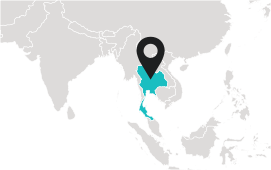
Thailand’s migrant workers face persistent risks of forced labor, debt bondage, and passport confiscation in high-risk sectors.
Verité’s work in Thailand includes research on improving working and living conditions on Thai purse seiner vessels and focused investigations on recruitment practices, human trafficking risks, and migrant labor conditions in shrimp farms, fish ports, and fishing boats as well as in the garment and electronic sectors.
Priority sectors
- Seafood
- Apparel and footwear
- Textiles and rugs
- Electronics
- Rubber
- Food processing and packaging
- Agriculture

Across Indonesia’s export sectors, labor rights concerns are widespread, including child labor, hazardous working conditions, and limited enforcement of labor protections.
Our work in Indonesia includes research and capacity-building to manage human rights risks in extended palm oil supply chains and forced labor research in the fishing sector. Verité’s Recruitment Cost Calculator provides accurate costs for recruiting Indonesian migrant workers to Malaysia’s manufacturing and construction industries.
Priority sectors
- Palm oil
- Seafood
- Apparel and footwear
- Textiles and rugs
- Furniture and wood products
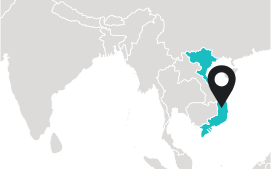
Workers in Vietnam’s high-risk sectors often face low wages, excessive overtime, and weak enforcement of occupational health and safety standards.
We provide comprehensive workplace assessments and ongoing supplier improvement programs in Vietnam that strengthen human rights due diligence, ethical recruitment practices, and labor risk prevention.
Priority sectors
- Apparel and footwear
- Textiles and rugs
- Electronics
- Furniture and wood products
- Machinery and metal products
- Seafood

India has the highest number of people living in modern slavery globally, estimated at over 11 million (2023 Global Slavery Index).
We bring decades of experience in workplace audits and labor rights research across diverse sectors in India. Our work includes combating forced labor in recruitment, strengthening worker-led organizations to address debt bondage, and piloting innovative traceability technologies in cotton supply chains for stronger labor rights due diligence.
Priority sectors
- Apparel and footwear
- Textiles and rugs
- Electronics
- Jewelry
- Gemstones
- Construction
- Seafood

Despite Japan’s recent labor reforms, foreign migrant workers continue facing labor rights violation risks, including unpaid wages, excessive hours, inadequate grievance access, and unsafe working conditions.
Our work strengthens foreign migrant workers’ rights and capabilities when they face inadequate social protections, workplace violations, and unsafe conditions. We provide educational training resources, advisory services on ethical recruitment practices, and stakeholder engagement to improve migrant worker protections.
Priority sectors
- Automotive
- Electronics
- Construction
- Seafood
- Agriculture

Widespread informal work in garment, construction, and agriculture sectors, combined with Bangladeshi migrant workers facing forced labor situations abroad, creates compounding vulnerabilities and limited worker protections.
Verité conducts factory assessments and worker trainings in Bangladesh while researching debt bondage risks facing Bangladeshi migrant workers. We help employers combat unethical recruitment through our Recruitment Cost Calculator and support worker-led organizations with evidence-based advocacy initiatives.
Priority sectors
- Apparel and footwear
- Textiles and rugs
- Construction
- Electronics
- Agriculture
- Energy and extractives
- Transportation and warehousing
- BPO services
Featured project
CUMULUS Forced Labor Screen
Digital platform for proactively mapping cross-border labor supply chains and screening for forced labor indicators.

Featured project
Advancing Worker Participation
The Advancing Worker Participation (AWP) initiative equips U.S. manufacturers with tools and training to strengthen worker representation and rights at work.

Featured project
The Farm Labor Due Diligence Initiative
A Verité-led collaboration with companies and civil society organizations to define good practices and resources that help companies eliminate labor abuses from global agricultural supply chains through comprehensive due diligence.

Featured project
STREAMS: Supply Chain Tracing and Engagement Methodologies
Comprehensive guidance to help businesses implement traceability systems that strengthen labor rights due diligence to combat forced labor and child labor across global supply chains.

Featured project
Responsible Sourcing Tool
Provides comprehensive global information on country- and industry-based risks of human trafficking as well as resources and guidance for addressing risks where they exist.

Featured project
FFACT Project
Worker-centered digital methods to document recruitment costs and reduce debt-related exploitation.
