Vision: February 2012

Verité up close:
Impactful Events

We are excited about several events in the near future, each of which will give us a chance to push forward topics that are vital to achieving change for vulnerable workers. 
 
Next week, we will discuss forced labor at the annual meeting of the Interfaith Center on Corporate Responsibility (ICCR), a uniquely powerful group of investors who have been instrumental in pushing for effective implementation of the California Transparency in Supply Chains Act.
 
On February 14, we will present our practical tools to help companies avoid modern-day slavery in their supply chains. This will take place at an Atlanta meeting co-sponsored by Coca-Cola and the United States Council on International Business (USCIB). 
 
In mid March, we’ll attend the Sedex annual suppliers conference to illustrate how our approach to management systems can improve transparency, strengthen control of social responsibility risks and build worker satisfaction – all within the context of strong business performance.
 
Later in March, we will be at the annual Skoll World Forum in Oxford. This gathering, full of social entrepreneurs and others devoted to social impact, is one of the most inspirational events we attend. A focal topic this year is impact – and particularly how to get more of it. For those of us in the corporate social responsibility world, the question of impact could not be more important. We will share our learning from that event in future issues of Vision.
 
We look forward to engaging you in these topics and others.

Dan Viederman
CEO, Verité


From the Field:
Fishy Business

By Allison Arbib, Raw Materials Program Manager

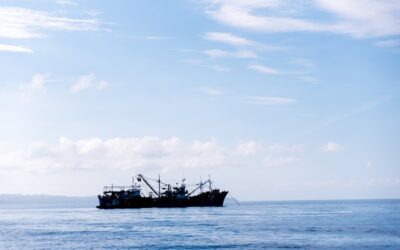
Workers in fisheries and aquaculture are among the world’s most vulnerable people. Companies that sell fish and fish products to a western market, or to consumers in wealthier parts of the developing world, should recognize that workers who make their goods are vulnerable to labor violations and that these problems need more far attention than they have received.
 
Fishery workers operate at the bottom of the supply chain, are often isolated and generally work seasonally. Many are migrants, and over the past five years, Verité has found numerous cases of labor migration into fisheries that have ended in conditions of forced labor. Fishery workers are often indebted, and they often work without benefit of contracts. These risk factors make fishery workers vulnerable.
 
Verité has found these problems to be present in ‘industrial’ fishing, community-based fishing, aquaculture and fish processing throughout South and Southeast Asia.
 

Debt, patronage and dependency cause vulnerability for workers in fishing communities.

In many small communities, fishing represents one of the only viable livelihood opportunities for workers. Most workers that Verité has worked with or interviewed over the years have only an elementary school education or below, and many say that working in the fishing sector is the only way for their families to survive. Often, children leave school to work in the fishing sector because the quality of their schools is poor, and this way, they can help support their families. Because wages are low, fishermen are often dependent on the boat owners or bosses within their communities to provide loans to cover their household expenses during low fishing seasons and to provide supplies for fishing activities.  
 
Workers can also become indebted when taking “in-kind” loans from their employer, for example by taking loans of rice that must be paid for with inflated earnings deductions. In the event that the amount of the loan exceeds a fisherman’s earnings, he may be obliged to return on the next trip to try to pay down his debt. Verité has found this pattern in several types of commodities and raw materials over the years. The necessity of taking on debt can become even more exaggerated in the fish sector: when fish stocks are low due to overfishing, fishermen’s wages can fall even lower, necessitating more loans just to make ends meet.
 

The fishery work force is increasingly casual.

Very few workers have any kind of formal agreement with their boat owner or supervisor. Having grown up in fishing communities and families, workers have a deep understanding of what it means to be a fisherman. However, they are generally denied protections given to workers in more formal sectors.
 
Verité has found that the labor at the plants and canneries where fish are processed is becoming increasingly casual. In addition to competing on speed and cost, plants must now make assurances to buyers that they are equipped to meet social compliance requirements. In Verité’s experience, when facilities lack the internal capacity to meet social requirements it becomes attractive to source workers through external labor contractors, allowing plants to avoid responsibility for these ‘temporary’ workers. To work around national laws providing benefits to permanent workers, some casual workers are required to take short term contracts of less than six months which preclude them from receiving benefits mandated for permanent workers. To regain employment after that six month period, workers may be induced to falsify documents. In some cases, the labor broker may also act as a supervisor at the plant or cannery, and may have the power to manipulate workers’ hours and wages and to enforce disciplinary measures.
 
Problems that emerge for workers generally remain hidden. Of the many workers with whom Verité has spoken, very few lodge complaints. There is rarely a grievance mechanism available to workers. Also, as one worker pointed out to a Verité researcher, “There are only a handful of plants and thousands of workers who want to work here.” Furthermore, the social accountability that some western brands have driven into manufacturing and some agricultural supply chains is essentially absent in fisheries, depriving vulnerable workers of a potential lifeline.
 

Building Livelihoods and Accountability

Not unlike other sectors, people take hazardous and poorly-paid jobs in fishing and aquaculture because they have few options. Fishing and aquaculture are often a source of income and access to credit where none would exist otherwise. But as elsewhere, this lack of alternate livelihoods compounds labor exploitation. Workers feel that they can’t complain about conditions for fear of losing their jobs, and know that there are others willing to accept the hazardous conditions and low pay.
 
Verité feels that these issues should be addressed on several fronts:
  1. Companies sourcing products from the fishing, shrimp and aquaculture sectors must apply best-practice approaches to information gathering at the bottom of their supply chain that have become common in other sectors. Fishing communities can often be closed, and due to the nature of fishing, it can be difficult to gain access to the boats and interview workers in a way that is comfortable for them. Verité’s experience is that such information can be credibly gathered, however, using skills and approaches that we and our partner NGOs have applied in research into the fishing sector.
  2. Seafood-oriented certification systems must do more to address labor conditions as inextricably linked to the environmental factors they currently prioritize.
  3. Once information is gathered, companies that sell fishery products should share it with their business partners in the supply chain, such that accountability can be built at all levels.
  4. Companies must recognize that the lack of alternative livelihoods and the environmental consequences of overfishing exacerbate the problem of working conditions.
  5. Provision of alternative means of credit can be a useful tool to help workers avoid dependency on their employer through debt, and thus can reduce vulnerability.
  6. Labor migration in fisheries is a problem just as it is in other sectors. The tools that Verité has disseminated through our Help Wanted Toolkit are applicable in this sector, and should be applied.
  7. Where child labor in fisheries is present (see the draft ILO report: Guide to Child Labor in Fishing and Aquaculture) governments must apply a full range of interventions, including recommitting to providing quality education to all children through the minimum age of mandatory schooling. The ILO has identified education as a crucial way to prevent child labor.
Fishing is a dangerous occupation. Companies involved in this sector can take important steps by committing to a deeper understanding of conditions faced by workers in their supply chains.


What We're Talking About:
SB657 Disclosure

We’ve been reading a lot of disclosures related to the California Act. We feel like literature students, conducting deep textual analysis to identify the hidden meaning in these mostly formulaic statements.
 
Here's the background: California passed a law that went into effect on January 1, 2012. It requires that companies over a certain size disclose how they are addressing forced labor (modern-day slavery, human trafficking) in their supply chains. 
 
Given that we know slavery in supply chains can exist everywhere, that debt-bondage and labor migration are two major risk factors and that the production of commodities is of particular concern – have we really learned anything from these initial disclosures?
 
The simple answer is no. Required to simply disclose, the great majority of companies have done the minimum. In most reports, companies have reiterated that they implement social compliance or ethical sourcing programs that involve a range of audits, training programs and internal accountability. Given the magnitude and seriousness of the problem, this seems at best a missed opportunity to strengthen protections for extremely vulnerable people.
 
What needs to change? Better disclosure can drive better performance, but both the disclosure itself and the actual performance need to change substantially.
 
For disclosure, improvement is simple. Companies should identify where they have risks in their supply chains and what they have done to address those specific risks. The risk of forced labor is widespread, but not evenly spread across sourcing. It tends to concentrate in locations where raw materials (for example cotton or other agricultural crops) are being sourced, and in places where labor migrants work. This requires them to map forced labor risk against their sourcing profile. Companies should be disclosing what specific efforts they are undertaking to resolve risk for labor migrants, as well as how they are addressing risks in raw material production.  
 
In terms of performance, companies need to do several things differently in order to ensure that they don’t engage forced labor in their supply chains. Two of these would be powerful first steps:

First, companies have to closely examine the use of labor contractors to provide workers for their suppliers, making sure that workers do not pay excessive fees and face vulnerability due to debt-bondage. Companies can require suppliers to use only brokers that adhere to Verité’s forthcoming ethical standards for labor brokerage. Verité’s Help Wanted Toolkit provides a detailed and ready-to-use guide, so there is no excuse for ignoring this particular issue.

Second, companies have to look at the harvesting or gathering of raw materials that end up in their products. Slavery has been found in agriculture, mining and fisheries (as we’ve detailed elsewhere in this issue of Vision).

Unless companies are first mapping and then assessing conditions facing workers at the bottom levels of the supply chain, they are not addressing risks. Unfortunately, without this information, their disclosures against the California Act are not particularly meaningful.


Latest News:
Solving Overtime Problems in China

"For Workers' Benefit: Solving Overtime Problems in Chinese Factories

If your brand sources from Chinese factories, chronic, illegal overtime may be imposed on employees at those factories without your knowledge. While the Chinese government has developed a regulatory system intended to provide protections, it is often misused to enable the very overtime it was designed to alleviate. Often, the result is many more work hours, lower overtime wages, no time off and greater risk of worker injury or worse.

In this White Paper, Verité outlines the sources and reasons for this problem, explains the Chinese Comprehensive System and illustrates how a systems-based approach can provide sustainable solutions. This White Paper is also available in Chinese. 阅读本文的中文版本。

An excerpt from "For Workers' Benefit": 

By involving staff from different functions within a company, important insight into the root causes of excessive work hours can be derived. At the same time, a cross-functional effort can help put in place operational changes for improved productivity and profitability. Most importantly, it increases the likelihood that solutions will be effective and sustained, and will have the support of key managers and departments.


Insight to Impact

We audited a factory in South America where we found serious abuses: workers were verbally harassed, insulted and called "stupid." Additionally, health and safety problems like blocked exit routes and missing first aid kits were discovered. Compounding the problem was that workers had no way to make a complaint.

After taking these findings and reviewing them with the factory, the company implemented a corrective action process. Anti-harassment training and policies were put in place, an effective grievance mechanism was implemented and health and safety violations were eliminated. Workers told us that they could tell things were getting better and that their work environment had improved.